MUCM: Mob 7920 4840- Tel: 21-220 286 - Tel: 21-636 027
Email: mifsudtony@gmail.com - www.unbornchildmalta.org
Web Sponsored by Square Concept Ltd. - Mob: 9942 3461
Businesses still not breastfeed friendly
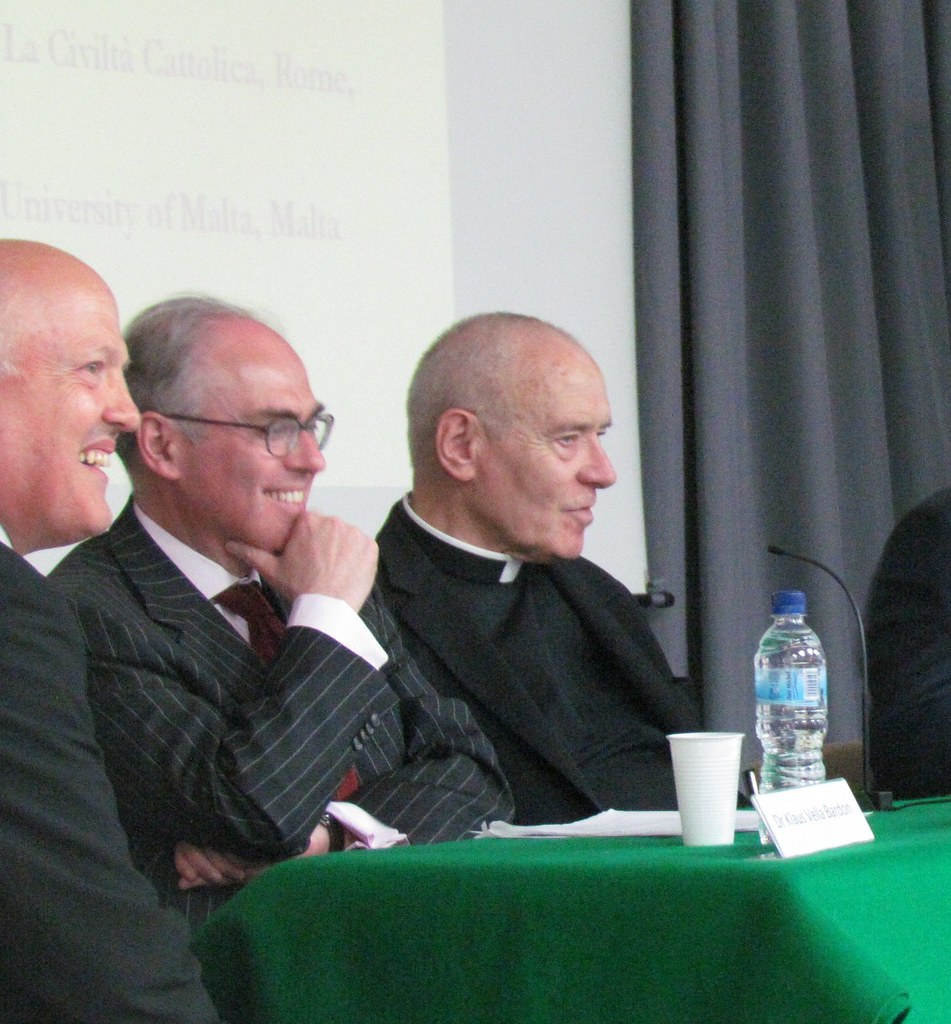
Times of Malta report on the Conference on Family-Work Balance and Parenting organised by the Malta Unborn Child Movement, the Swedish Embassy in Malta, the Midwifery Department of the Faculty of Health Sciences of the University of Malta, and the Malta Council of Women on November 11, 2011 at the Phoenicia Hotel, Floriana, MALTA.
Employers have to become more flexible with workers and allow them to work from home, a conference on work-family balance heard.
Employers should have a more flexible approach towards working hours to allow their staff to better balance their time between the office and their family’s needs, Malta Employers’ Association director Joseph Farrugia said.
Research carried out by the association, he said, showed employers were upholding some 85 per cent of requests for family-friendly measures. However, there was room for improvement and employers had to move away from the rigid nine-to-five day and be more flexible. Mr Farrugia was speaking during a conference entitled Work-Family Balance and Parenting. The conference brought together unions, employer and employee representatives and other organisations to debate the issue of maintaining a work-life balance in today’s busy world.
A recent study, published by flexible workplace provider Regus, showed that the majority of Maltese employees worked well over eight hours a day, with two in every five regularly taking work home.
The conference covered several issues ranging from flexible working hours and conditions to the sharing of household and parental responsibilities.
Rita Borg Xuereb, head of the University’s Midwifery Department, gave an overview of her PhD research that looked into work-family balance, among other things.
As part of her research, that involved interviews with 221 couples between 2005 and 2008, she found that men were highly supportive during pregnancy, almost sharing household tasks equally. However, things changed after the woman gave birth when the support decreased. “Nevertheless, Maltese men have moved away from the completely traditional division of household tasks and are more supportive with regard to household tasks but do not share equally as one would expect in a dual earner household,” Dr Borg Xuereb said. She found that women still took on the load of household and parental responsibilities even if they worked.
This highlighted the need to work on gender stereotyping and the need for equal sharing of parental responsibilities between both genders.
Jean-Pierre Farrugia, the Nationalist MP who chairs the Parliamentary Committee on Family Affairs, raised the issue of maternity leave, saying that last year in the public sector, 581 mothers benefited from the 14-week period allowed.
Speaking before it was revealed by The Sunday Times yesterday that this was to be increased to 20 weeks in today’s budget, he noted that Malta and the UK have the lowest full-rate paid maternity and paternity leave in the EU in terms of the number of weeks. Edwin Balzan, from the Union Ħaddiema Magħqudin, spoke about the need to have a national policy aimed at strengthening the family. He stressed on the importance of introducing more remote working opportunities that allowed parents to work from home.
Louise Bugeja, from Parent Craft, a service offered to expectant parents at Mater Dei Hospital, said businesses were still not “breastfeeding-friendly” and did not allow employees time to breastfeed their baby.
Over recent years, he said, the government introduced various measures such as flexitime and tax incentives to encourage mothers to work.
The conference, held at the Phoenicia Hotel, Floriana, was organised by the Malta Unborn Child Movement, the Midwifery Department, the National Council of Women and the Swedish Embassy in Malta
EU Parliament Policy Debate
Protecting the unborn baby from alcohol
7 September 2011, European Parliament, Brussel
The Malta Unborn Child Movement - MUCM - was represented in the policy debate in the European Parliament in Brussels by Ms Grace Attard, President of the Malta National Council of Women, an organisation in MUCM. Ms Attard attended as a member of the European Economic & Social Committee representing Malta.
Programme and presentations
Opening speeches
12:30 Welcome by MEP Elzbieta Lukacijewska
12:40 Mr Adam Fronczak, Ministry for Health, Undersecretary of State, Poland
Setting the scene
12:55 Risks associated with Prenatal Exposure to Alcohol, Martha Krijgsheld, chair of FAS Foundation of the Netherlands ( Power Point )
13:10 FASD children and their families: therapeutic dilemmas, Malgorzata Klecka, Poland (Presentation in English and Polish )
European solutions
13:20 Measuring the problem in Europe, Dr Lars Moller, WHO Europe ( Power Point )
13:35 Labelling: A legal obligation with a positive impact, Maitre Benoit Titran ( Power Point )
13:45 Recommendations for effective Health warning messages, Mariann Skar, Eurocare ( Power Point )
13:55 What could be done at the European level? Diane Black, EUFASD ( Power Point )
14:10 Way forward at EU level, Keynote speaker: Mr John Dalli, EU Commissioner for Health and Consumer Protection ( Commissioner's speech )
14:30 Debate
14:55 Closing remarks
Presentations are available here: click below 1 & 2
1. Report (Click Here)
2. View pictures from the event by going to:
http://www.eurocare.org/library/latest_news/our_shared_responsibility_protecting_the_unborn_baby_from_alcohol
Tony Mifsud
Coordinator, Malta Unborn Child Movement
Mob: 7920 4840
Alternative Solutions to Abortion
Ms Grace Attard from Malta, member of the European Economic & Social Committee (EESC) of the European Union, calls for alternative solutions to abortion.
From the records of EESC
May 2011
Speaking during the debate on the family in relation to demographic change, Grace Attard expressed her disappointment at the lack of reference to the unborn child, in the debate. What alternative solutions to abortion are we offering mothers who are experiencing difficulties during pregnancy, including better services to be in a better position to make choices. The opinion, which was specifically requested by the Hungarian Presidency, attracted the attention of a large number of EESC members during the debate which took place during the May Plenary session of the EESC
Grace Attard also questioned whether any research has been carried out regarding the health risks for the unborn child during pregnancy, resulting from lack of healthy lifesyles and the health risks at the workplace that could result in children being born with disabilities or much worse in premature death.
In reply, the rapporteur general stated that this was an important issue. There is the need to address the dramatic experiences of these women, understanding their situation and offering alternative practical choices
Ms. Grace Attard is the President of the Malta National Council of Women and member of the Core Group of the Malta Unborn Child Movement.
The Malta Unborn Child Movement - MUCM - and the Swedish Embassy in Malta.
Seminar - Caring for the Unborn Child
Friday, 10th December, 2010 at the Auditorium, Mater Dei Hospital, MALTA
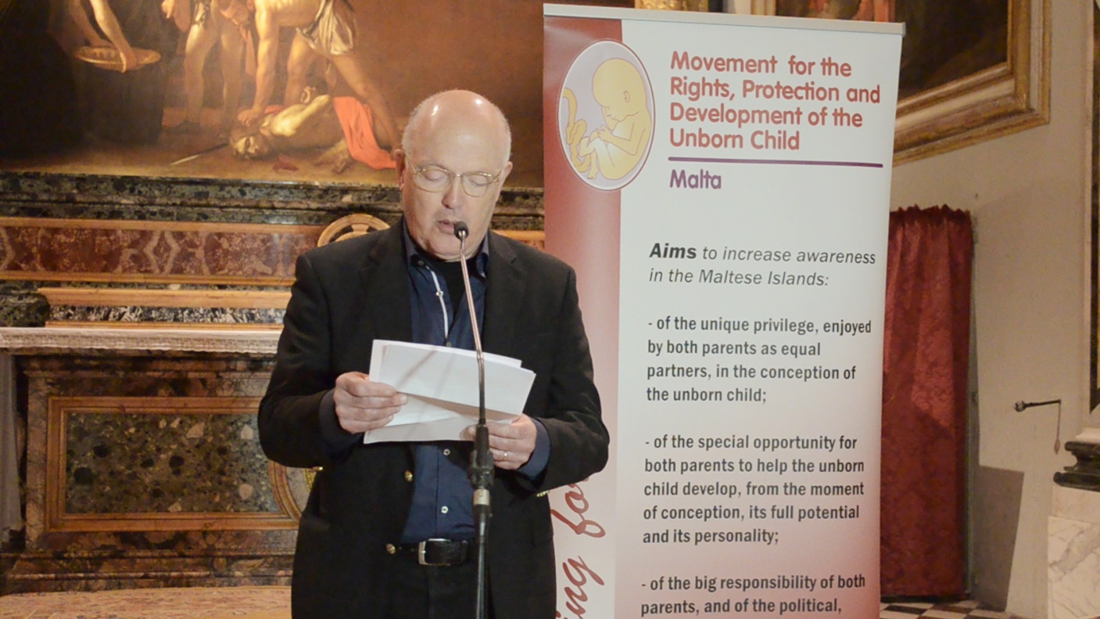
The Malta Unborn Child Movement and the Swedish Embassy in Malta, in collaboration with the Department of Midwifery, Faculty of Health Sciences, University of Malta and the Malta Midwives Association organised the Seminar - Caring for the Unborn Child at the Auditorium of Mater Dei Hospital, on 10th December, 2010. The National Council of Women, Agenzija Sedqa of the Foundation for Social Welfare Services, the Malta Midwives Association, Caritas Malta, the Health Promotion and Disease Prevention Department, the Union Haddiema Maghqudin and the Social Assiatance Secretariat of Catholic Action, member organisations in the Malta Unborn Child Movement, were the main promoters of the Seminar.
Ms Grace Attard, President, National Council of Women and Member of the European Economic and Social Committee was Chairperson of the seminar. She opened the discussion by emphasising the importance of addressing all types of famlies which all have their particular needs.
In his welcome address Tony Mifsud, Coordinator of the Malta Unborn Children Movement stated that the British press reported that lately at least 600 Scottish babies a year were judged to be at risk of abuse before they are even born..and that official figures revealed that 331 unborn babies were placed on the official child protection register, many of them because of their mother's drink or drug problem. He added that research had revealed that babies in the womb were being exposed to cocktails of toxic chemical and that their blood was swimming with dangerous compounds found in everyday household cleaners, perfumes and even pans and furniture. This, he insisted, is affecting the climate for the unborn child in the womb.
Mr Mifsud suggested that an opportunity is arising for Malta to take the initiatve in the workings of international bodies and initiatives dedicated to the welfare of children to proclaim before all the member states of the EU, and the world community, that "all men are created equal" and that all unborn children, 200 million every year world-wide, including 4000 in Malta - the common beginners in all mankind, and "created equal" everywhere - should be considered the "common concern of all mankind" and that their dignity, rights, protection, care and development should be the common moral, legal and political responsibility of the world community.... in word... on paper ...and in deed... everywhere.
In her welcome speech, H.E. Ulla Gudmundson, Ambassador of Sweden to Malta. expressed her keen interest working on this issue in Malta. On a very positve note she stated that we all need to work together on issues that are similar in Malta and Sweden, but that needs to be addresssed in the context of the different cultures, not least where traditional alcohol intake is one of the problems.
Hon Dr Peter Micallef, Parliamentary Assistant at the Ministry of Health, who addressed the Seminar gave a holistic overview of ethics reagrding the rights of the unborn child from the moment of coneption. He also spoke about preparations for both father and mother when they are expecting a child; and preventive measures for pregnant mothers, especially those in vulnerable situations of substance abuse, smoking and alcohol abuse.
Ms Eva Karin Envall, Project Director Swedish National Institute for Public Health, Sweden gave a presentation of an evidence-based project that she had beeen working on for the past 7 years, together with her personal experience on Ante-Natal Care, Child Health Services and Alcohol and Drugs during Pregnancy − as a Matter of Public Health.
Particpants, included a wide range of medical practioners, service providers, Ph.D students who are carrying out reserach on related topics, as well as non-gvernamental organisations. They spoke about their experience, unfolding several aspects linked to the well-being of the unborn child, These included planning a preganacy, workplace legislation and enforcement on alchohol abuse and substance abuse, how to deal with difficulties drug starters come across as well as hardened abusers, the different types of drugs and current stastitics on abuse by sex and age groups. They considered also the social and economic consequences of substance abuse, adequate support sturctures, the role of the media in advertising and the strong lobbies of ahcohol companies, among others. The importance of appropriate education at all levels was also emphasised. Most revealing was the situation of pregnant inmates who are serving a prison sentence. The conditions of mothers living with their children of various ages was one of the most areas of deep concern, in particular the negaative psychological, mental and social consequences for children later on in life.
During a short discussion on "What can be done ar EU level?" Ambassador Ulla Gudmodson and Chairperson Grace Attard outlined several initiatives that the EU Commssion is taking in particular with regards to The Rights of the Child, reducing alcohol related harm, child poverty and children's wellbeing, maternity leave, breasteeding, and work/life balance.
The closing address by Dr Rita Borg Xuereb Ph.D. Head, Department of Midwifery, Faculty of Health Sciences, University of Malta, based on a study she carried lately revealed some very useful findings on the fertility rate in Malta, fathers' attitudes to the unborn child, single parenthood, enotional wellbeing, and work-life balance. Referring to the increased awareness of the need to care for the environment, Dr Borg Xuereb ended her presentation with a very significant statement − "If there is one thing that we can change within our limits is the way we care for the unborn child".
A new photo in the photo section
Seminar - Caring for the Unborn Child 10-12-2011 by Malta Unborn Child Moveme- MUCM - and the Swedish Embassy in Malta at Auditorium, Mater Dei Hospital, Malta - The Swedish Ambassador, Ulla Gudmundson (sitting, second from right) with the Core Group of MUCM.
The Malta Unborn Child Movement - MUCM - met the Swedish Ambassador to Malta, Ms Ulla Gudmundson, at the Phoenicia Hotel, Floriana, Malta on Monday 5th October 2009. to pass on an MUCM message to the Swedish EU Presidency.
Text of MUCM's message to the Swedish EU Presidency
Following the publication in the Times of Malta of MUCM letters (see attached printed copies) to the Swedish EU Presidency and the Malta Government and the two Seminars by the Swedish Ambassador to Malta and the Malta Government on Climate Change at the Phoenicia Hotel, Malta, MUCM meets the Swedish Ambassador to Malta, Ms Ulla Gudmundson, at the Phoenicia Hotel, Floriana, Malta on Monday 5th October 2009 at 11.45am to request her, graciously, to pass on its recommendations to the Swedish EU Presidency
From letters by MUCM in The Times of Malta: ...the Malta Unborn Child Movement - MUCM - made up of 45 Maltese organisations, is proposing that, within the context of the priorities assigned to the environment and climate change by the Swedish Presidency, climate change will include also climate change in the womb as "the common concern of mankind". That is, how climate change affects also the wholesome and sustainable development of about 200 million unborn children, every year, in the European Union and worldwide. "Climate change" is doing as much harm to unborn children as it is doing to those who are born.
In her book "Environmental Justice and the Rights of Unborn and Future Generations" Dr. Laura Westra, Professor of Philosophy at the University of Windsor, states: Quote: ìThe traditional concept of social justice is increasingly being challenged by the notion of a humankind that spans current and future generations.î Her book has been described as "the systematic examination of how the rights of the unborn and future generations are handled in common law and under international legal instruments."
A dimension of man's relationship to his environment is implied in the concept "the common concern of mankind." While covering directly climate change in general, it focuses also on issues that are generally basic to mankind, like climate change also in the womb. This, through the inadvertent exposure to toxic substances and emissions of would-be mothers and fathers especially at places of work and the world in general. Also, through the inconsiderate consumption of drugs, alcohol and tobocco before and/or during pregnancy, and the lack of love for and rejection of unborn children by their parents - which also conditions the affective development of unborn and born children - manifested by parents in a variety of ways during the pregnancy. The concept "the common concern of mankind" arose out of the UN deleberations on Malta's proposal on climate change.
In her book Environmental Justice And The Rights Of Unborn And Future Generations, Laura Westra, professor of philosophy at the University of Windsor, states: "The traditional concept of social justice is increasingly being challenged by the notion of a humankind that spans current and future generations".
"Her book has been described as "the systematic examination of how the rights of the unborn and future generations are handled in common law and under international legal instruments".
A dimension of man's relationship to his environment is implied in the concept "the common concern of mankind". While covering directly climate change in general, it focuses also on issues that are generally basic to mankind, like climate change also in the womb. This through inadvertent exposure to toxic substances and emissions of would-be mothers and fathers, especially at places of work and the world in general. Also through the inconsiderate consumption of drugs, alcohol and tobacco before and/or during pregnancy and the lack of love for and rejection of unborn children by their parents, which also conditions the affective development of un/born children, manifested by parents in a variety of ways during the pregnancy. The concept of "the common concern of mankind" arose from the UN deliberations on Malta's proposal on climate change.
Please see: http://www.ewg.org/kid-safe-chemicals-act-blog/kid-safe-chemicals-act/ - Chemicals and Unborn Children
This within the context of Malta's pledge "... to continue to actively support the protection of the basic human rights of children in the world particularly as laid out in the International Convention on the Rights of the Child" and that "Malta will continue to support international actions and policies that respect the rights of the unborn child and foster the best interests of children." See website: Malta Ministry of Foreign and EU Affairs
MUCM also made a specific proposal to the Swedish Ambassador for consideration by the EU Swedish Presidency
Text of the proposal:
The Malta Unborn Child Movement to the EU Swedish Presidency, through the Swedish Ambassador to Malta, Ms Ulla Gudmundson.
- The Swedish Ambassador to Malta, or her representative,
- A representative of the Maltese government working on Maltaís climate change proposal to the United Nations,
- A representative of the Malta Unborn Child Movement,
form a task group, within the coming weeks, to work on concrete recommendations to the Swedish, and successive EU Presidencies, so that within, and following, the sterling work initiated by the Swedish EU Presidency on Climate Change, the EU, as "a global actor", includes climate change also in the womb and works for the protection from harm, and the "sustainable development" and general well-being, of the 200 million unborn children, every year, in the EU and the world, and future generations.

Tony Mifsud,
Coordinator,
Malta Unborn Child Movement
Mob 7920 4840
Tel 21-636 027
MUCM Core Group
Malta Midwives Association - Health Promotion Department
Social Assistance Secretariat - National Council of Women


Back to previous page